
Aydarkul Lake, Uzbekistan: A Desert Lake Born from Soviet Irrigation
Updated: Jul 26
Located in the Kyzylkum Desert between the cities of Bukhara and Samarkand, Aydarkul Lake is one of the largest lakes in Uzbekistan. Unlike natural lakes, Aydarkul was created by Soviet-era water diversion projects linked to the Syr Darya River, the same schemes responsible for the environmental changes that contributed to the Aral Sea shrinking.
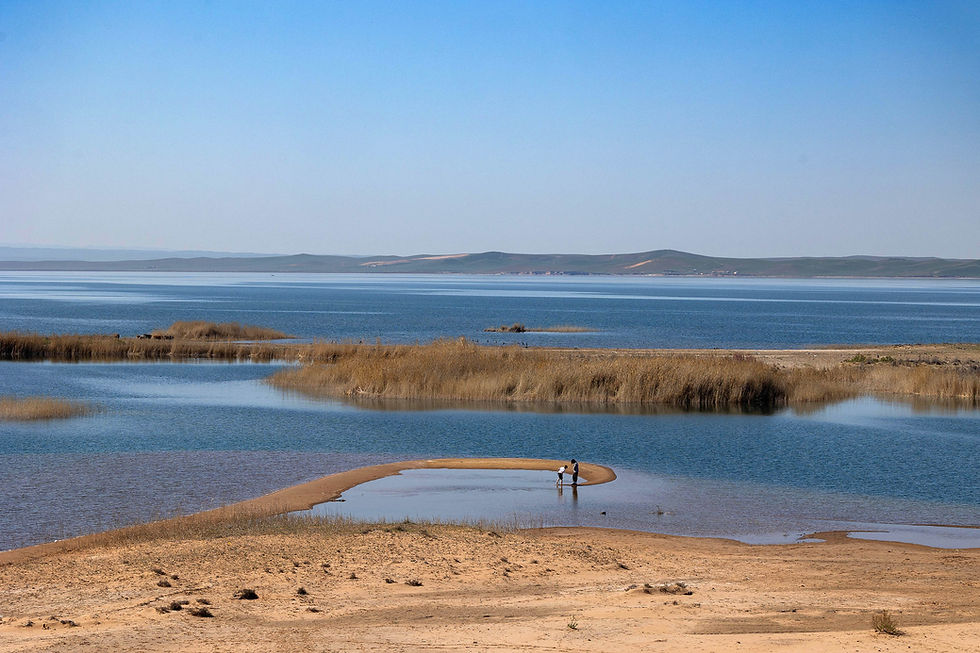
Most travellers visit Uzbekistan for its Silk Road cities. I was no exception. While planning my travel between Bukhara and Samarkand, however, I discovered something unexpected: a vast lake amidst the Kyzylkum Desert—Aydarkul Lake. The photographs raised an obvious question: How could a lake of this size exist in one of Central Asia’s most arid regions? I got curious about its origins and added it to my itinerary.

We left Bukhara early morning and drove northeast towards the Kyzylkum Desert. Along the way, we stopped at Sarmishsay, a valley in the Navoi region, with granite hills known for ancient petroglyphs, which offer a glimpse into a prehistoric landscape. Beyond Sarmishsay, the cultivated countryside gradually gave way to desert scrub. Villages became increasingly scattered, and the asphalt road eventually yielded to rutted desert tracks.

After a while, a ribbon of blue appeared on the horizon—Aydarkul Lake. Although it now appears to be part of the natural landscape, its origins lie in Soviet irrigation and water management schemes, which also played a major role in the shrinking of the Aral Sea.
Why Is There a Lake in the Middle of the Kyzylkum Desert?
To understand Aydarkul, it helps to look back at the Soviet era, when large-scale irrigation projects transformed Central Asia into one of the world’s major cotton-producing regions. Waters from the Syr Darya and Amu Darya Rivers were diverted through an extensive network of canals, reservoirs, and irrigation channels to support cotton cultivation. One of the most important components of this system was the Chardara Reservoir, built to regulate the flow of the Syr Darya and store water for agriculture.

During years of heavy snowfall in the Tian Shan Mountains, increased snowmelt sent larger volumes of water into the Syr Darya, which resulted in increased inflow into the Chardara Reservoir. When water levels occasionally exceeded safe limits, to protect downstream settlements and farmland, excess water was discharged into the nearby Arnasay depression, a vast low-lying basin that had long remained a dry salt plain.
Over the years, more water spilled into the basin. And because the depression had no natural outlet, the water remained trapped. Shallow lagoons expanded and merged, eventually forming the Aydar–Arnasay Lake System, which comprises three main salt lakes—Arnasay, Aydarkul, and Tuzkan—Aydarkul being the largest. (Tuzkan means ‘salt source’; until 1969 the locals harvested salt from this lake, hence the name.) What began as an emergency measure to avoid flooding gradually became permanent.

Aydarkul Lake and the Aral Sea represent two contrasting outcomes of the same Soviet water management policies. During our visit to the Aral Sea, we saw abandoned ships rusting on what was once the seabed—a stark reminder of the consequences of those decisions. At Aydarkul, we saw the opposite: The same river diversions that shrank one inland sea created a lake elsewhere.

Stay at a Yurt Camp near Aydarkul Lake
After nearly 5 hours on the road from Bukhara, we reached a yurt camp near Aydarkul Lake. The camp (a cluster of yurts) stood in isolation amidst the desert. We saw no permanent buildings in the vicinity and little evidence of modern development. Sand dunes and low ridges extended towards the horizon in every direction.

We spent the late afternoon exploring the surrounding desert and then climbed a nearby ridge to witness the sunset. The desert stretched uninterrupted as far as our eyes could see. And we saw no life around other than a herd of cows grazing farther down.

As the sun descended, the colours of the sand shifted steadily. Golden dunes deepened to amber, then orange, before fading into the muted tones of dusk. With the approach of darkness, a profound stillness settled over the desert.

Later that evening, we gathered around a bonfire and enjoyed barbecued chicken kebabs while a Kazakh musician sang traditional songs. Beyond the flickering glow of the fire, no lights were visible anywhere around.

As the bonfire burned down to embers, the sky took over. Thousands of stars emerged. Far from cities and artificial light, the sky seemed crowded with them.
Aydarkul Lake Today
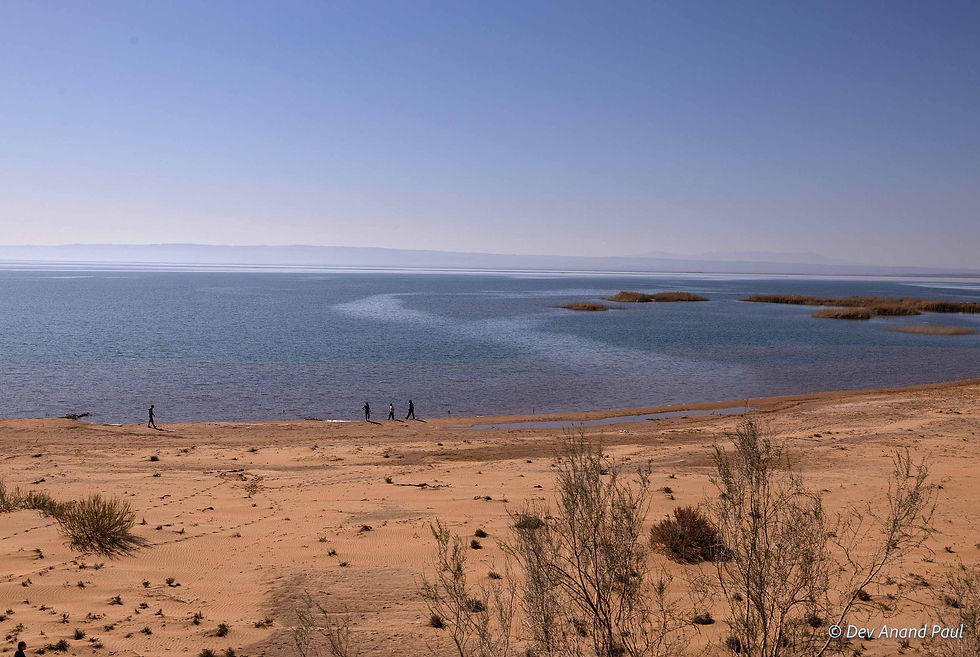
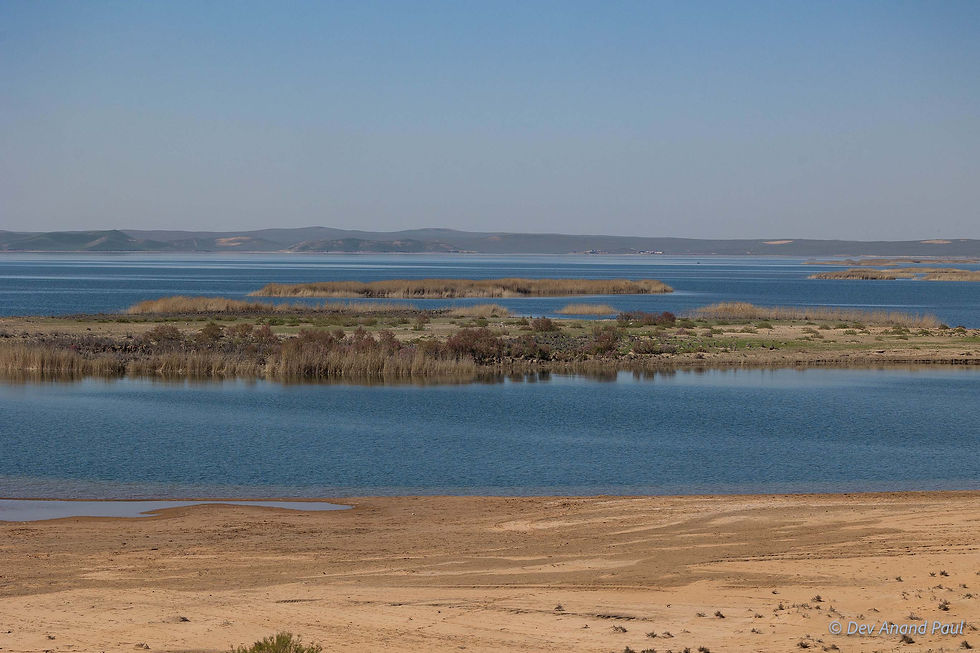
The following morning, the camp manager, Ruslan, drove us to a ridge overlooking the lake. From the top, we saw a massive expanse of blue water stretching towards the horizon, bordered by the pale sands of the surrounding desert. It was difficult to believe that this immense lake had appeared only a few decades back.

Later, we walked down to the shoreline. Small waves lapped against the shore, stirred by a light breeze. Apart from a handful of visitors scattered along the water’s edge, the shoreline remained largely undisturbed. The water surprisingly tasted salty and bitter; this could be attributed to the high mineralization due to the saline wastewater from agricultural runoffs.

The lake is now home to eight species of fish, and its wetlands are staging and stopover sites for migratory waterbirds along Central Asian flyways. Small fishing settlements have come up along the shoreline, and tourism supports local livelihoods through yurt camps and guiding services. A basin that was once a barren salt depression now sustains wetlands, wildlife, fishing communities, and visitors alike.


I travelled to Aydarkul wondering how a lake could exist in the middle of a desert. I left with a better understanding of how human decisions were behind the creation of this unlikely lake.

Aydarkul Lake Travel Guide
How to reach Aydarkul Lake
Aydarkul Lake from Bukhara: around 4–5 hours by road
Aydarkul Lake from Samarkand: around 3.5–4.5 hours by road
Reserve your stay at a yurt camp through platforms like Booking.com
Travel agencies in Samarkand and Bukhara also offer package tours
Best time to visit Aydarkul Lake
Spring (April–May): mild temperatures, clearer skies
Autumn (September–October): comfortable weather
Summers are very hot; winters are cold and have fewer visitors.
Where to stay near Aydarkul Lake
Aydarkul Lake yurt camps offer a beautiful experience for the adventurous.
Shared bathrooms and toilets
Dinner and breakfast usually included
No/Limited electricity and mobile connectivity
Excellent opportunity for stargazing
What to carry for a visit to Aydarkul Lake
Plenty of drinking water
Sun protection (hat, sunscreen, sunglasses)
Light clothing for the day and a warm layer for the night and early mornings (during spring and autumn)
Torch or headlamp
Power bank
Basic medicines
Things to do at Aydarkul Lake
Walk along the shoreline and sandbars
Watch sunrise and sunset over the desert
Enjoy traditional music and campfires at a desert yurt camp
Observe migratory birds and wetland habitats
Food and facilities at Aydarkul Lake
Meals are freshly prepared and typically feature local Uzbek cuisine.
Vegetarian meals can usually be arranged with advance notice.
Shops, petrol stations, and ATMs are limited or absent near most camps.
Carry cash and any personal essentials before leaving Bukhara or Samarkand.

Related posts:
Aral Sea Disaster and Its Environmental Impacts: The Moynaq Ship Graveyard and Aralkum Desert
The Silk Road Explained: History, Trade Routes, and Cities of Uzbekistan
Bibi-Khanym Mosque, Samarkand: One of Islamic World’s Largest Mosques
Rishton Pottery: Uzbekistan's Ancient Blue Ceramics Along the Silk Road
The Story of Indian Coins: 2600 Years of Wealth, Power, Trade, and Culture
Bhutan Postage Stamps: How a Small Kingdom Revolutionized Global Philately
The Battle of Colachel: How a South Indian Kingdom Defeated the Dutch
My Son Sanctuary: The Cham Temples of Vietnam and Their Indian Connection
Armenian Church in Old Dhaka: History, Trade Networks, and the Legacy of Armanitola


I wish i could take a deep breath there. Thank you for sharing, indeed i feel i was with you in this journey, lively...
I can imagine you have had a wonderful experience of that amazing landscapes, quiet and full of serenity, not crowded with tourists.