
Birding in Walong, Arunachal Pradesh

Walong, a remote frontier town in Arunachal Pradesh and an eastern Himalayan biodiversity hotspot, is one of India’s least explored birding destinations. It offers a range of habitats, from river valleys and bamboo patches to forest edges, scrub slopes, and dense hill forests.
Its location near the Indo-Chinese biogeographic zone gives Walong a distinctive avifauna shaped by Himalayan, Indo-Chinese, and Southeast Asian influences. For birdwatchers, that means the chance of seeing several rare and range-restricted species that are difficult to find elsewhere in India.

But Walong is more than a birding destination. It is a place where nature, military history, tribal culture, and quotidian life still exist side by side.
This blog post draws on two visits—one in November 2024 and another in March 2026—and explores not only the birds of Walong but also the landscape and people that make this place distinctive.
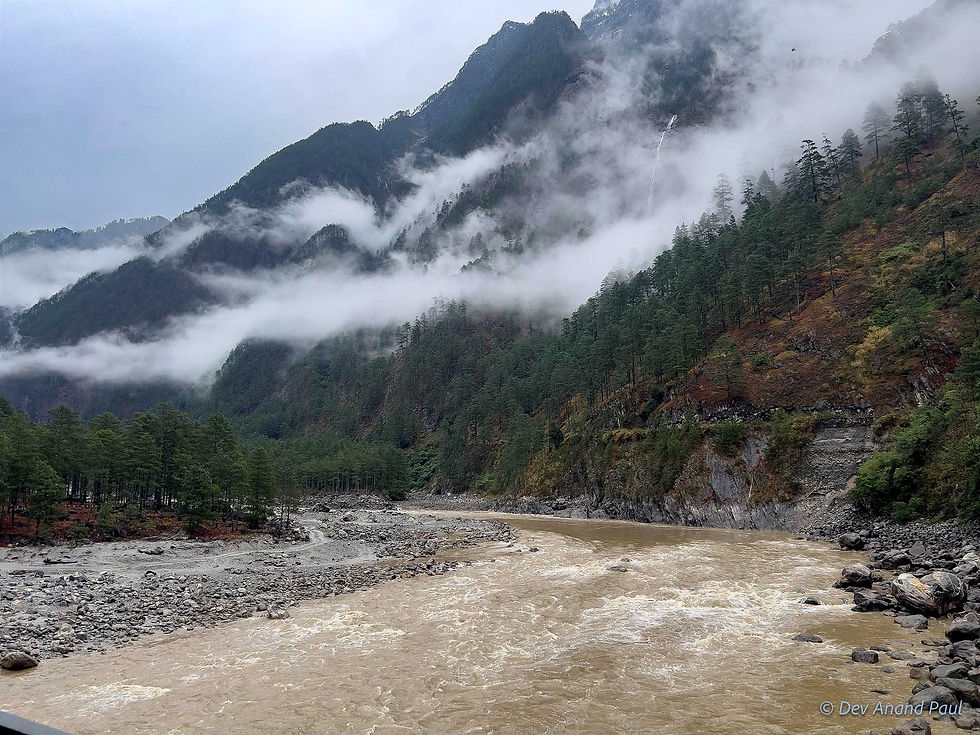
How to Reach Walong
Getting to Walong is part of the experience. Located on the banks of the Lohit River, it lies about 400 kilometres east of Dibrugarh, Assam; in this part of the country, however, travel is measured more by road conditions and in time than in distance.
We flew into Dibrugarh, drove to Tinsukia, and stayed overnight. The next morning we birded at Maguri Beel before the long drive towards Tezu, stopping whenever the habitat looked promising. We reached Tezu in the evening and stayed the night.
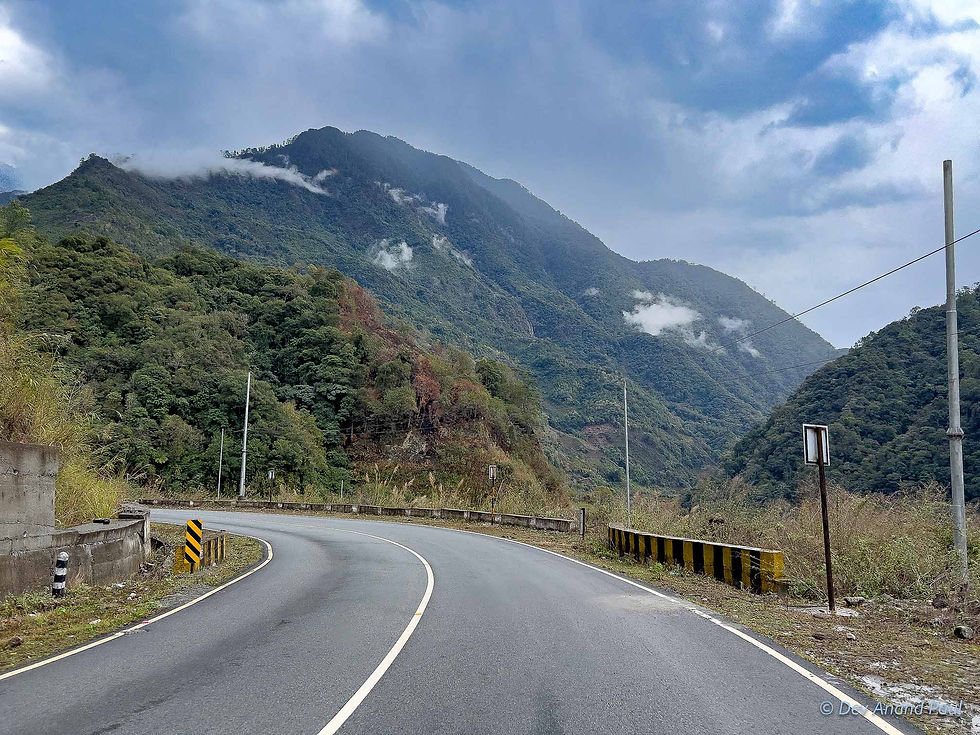
The following morning we started early and continued towards Walong. As we neared Udayak Pass, we were treated with stunning sceneries: sweeping mountain views, forested valleys, and the Lohit River running far below. The changing landscape was worth the long and tiring drive.
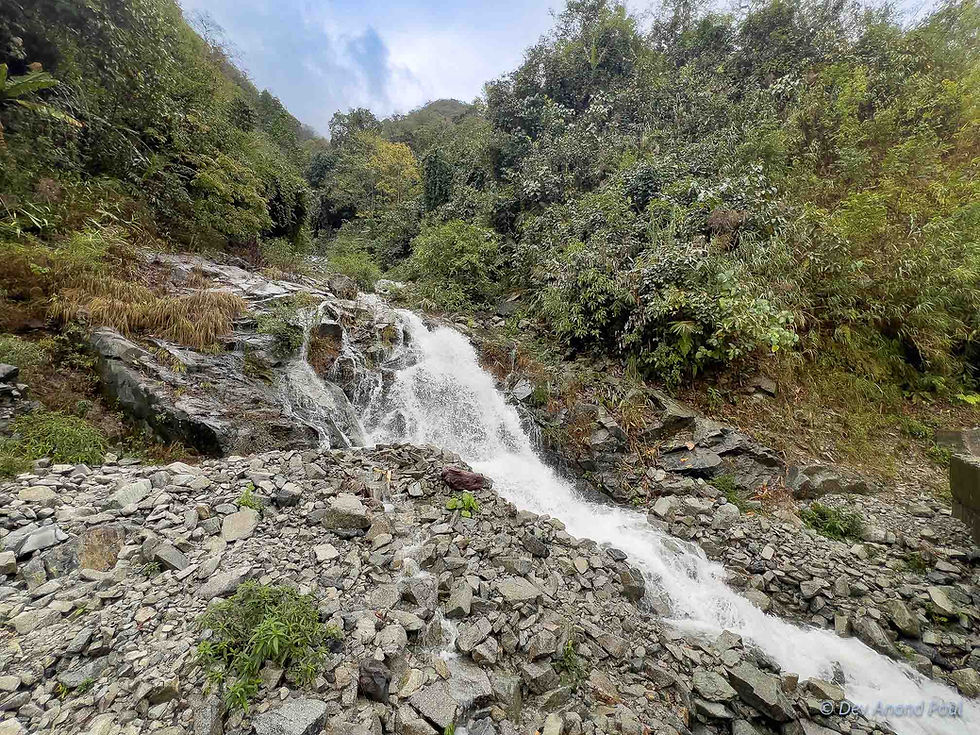
We reached Walong in time for a late lunch and spent the next two days birding there. Then we returned the same way—via Tezu and back to Maguri.
In this trip I was in the good hands of Binanda Hati Boruah. His rise from a humble background to one of the most respected birding guides in Northeast India deserves mention. He began as a boatman, drawn to birds and the forests around him. Life took him to Chennai, where he worked as a security guard until a co-worker told him ‘Go back home and become a birding guide’ and helped him return to his hometown in Assam. Back in Assam, he worked hard and established himself into one of the finest birding guides in the region—a quiet example of how ecotourism can create opportunities for local communities.
There is a standing joke among birders—whenever Binanda goes out, he manages to find a new bird in that area, giving everyone a reason to return.
Walong Border History: 1962 Indo-China War and the Eastern Arunachal Frontier
The name Walong comes from a local Mishmi dialect and means a ‘place of bamboo groves’.

When you travel through this region, you understand that Walong is as strategic as it is scenic; army camps, check posts, and bunkers abound, and military movement is part of everyday life here. The soldiers we met were friendly.
Walong is historically important, having been one of the key battle zones of the 1962 Indo-China War. Although India was defeated in the war, Walong was one among the few sectors where Indian troops launched a counterattack. Despite India having lost the position, the courage shown here gained Walong a lasting place in Indian military history.
Tribal Life in Walong, Arunachal Pradesh
Walong may seem remote, but it is not a wilderness. Part of a tribal landscape, Walong has had a long human presence. Its villages and the livelihoods and traditions of its people are closely tied to the forests and surrounding landscapes.
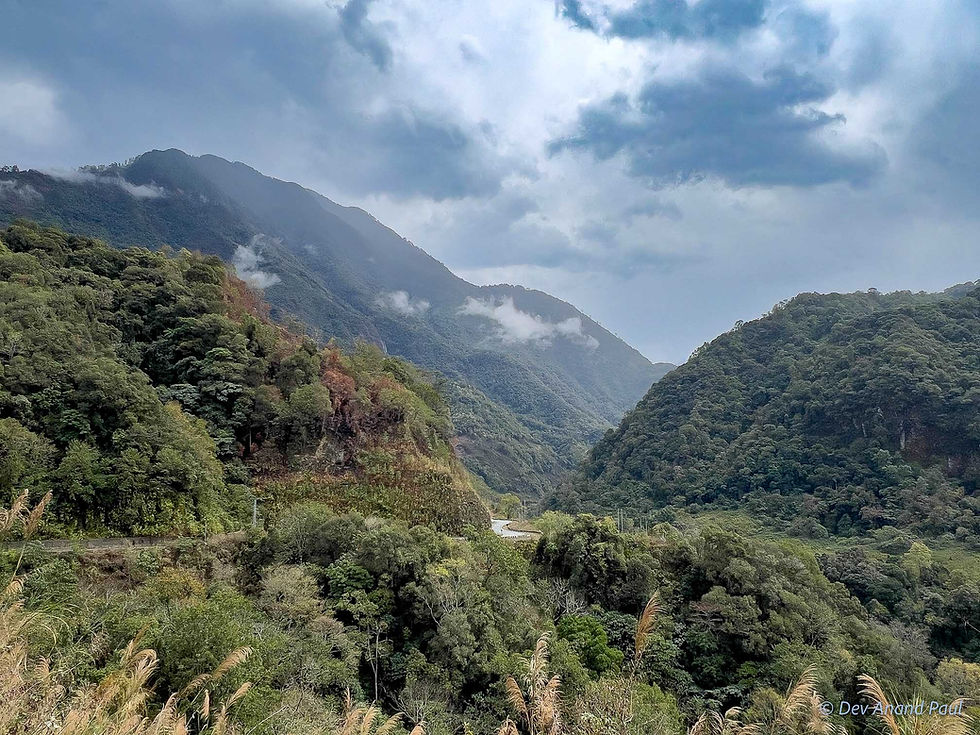
The Walong–Kibithu belt is home to the Meyor tribe, a small indigenous community. Its culture reflects the influence of its long-standing links with Tibet and of the eastern Himalaya. It follows Mahayana Buddhism. (Kibithu is a border village near the Line of Actual Control.)

Mountainscape Around Walong
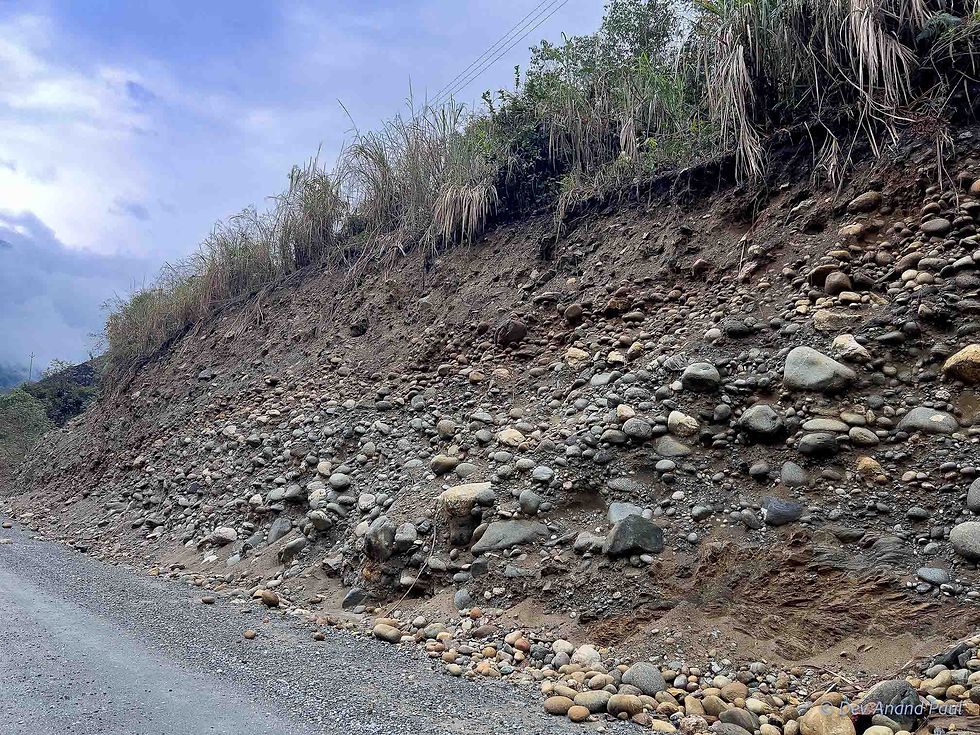
While driving through the region, in several places along the road, especially where landslides had exposed the underlying layers of soil in the slopes, I saw large round stones, like giant pebbles, embedded in the mountain slopes, unusual in a Himalayan landscape, where jagged rocks are more common. These could most likely be ancient river deposits, shaped by flowing water millions of years ago and later pushed up as the eastern Himalaya rose from tectonic plate collision.
Hunting Practices in Walong
The region has a long history of indigenous hunting, once tied to survival and cultural rituals. Traditional hunting involved bows, traps, and other handmade weapons; later, airguns became common. In recent years, Arunachal Pradesh government has taken visible steps to curb hunting through the Airgun Surrender Abhiyan, a wildlife conservation initiative, under which people voluntarily surrendered their airguns to help protect wildlife.
Forest Burning Practices Around Walong
I came across burnt slopes, cleared patches, and disturbed hillsides in several places. At first, I assumed these were linked to jhum cultivation, a traditional form of shifting agriculture practised across parts of the Northeast, in which trees and vegetation are cut, dried, and burned (slash-and-burn agricultural technique) before starting a short (about 3–5 years) cropping cycle.

But the scale of damage in some places suggested something more severe than small agricultural burns. Recent reports confirmed that Walong and the wider Lohit valley had experienced forest fires that required intervention from the Indian Air Force. That explained the larger stretches of burnt forest and blackened hillsides we saw during our trip.
Birding in Walong: Best Birding Locations in Walong, Arunachal Pradesh
Our birding in Walong was never confined to a single hotspot. It unfolded across the valley, along the Lohit River, on the road to Udayak Pass, and on the higher slopes around Helmet Top. What made birding especially interesting was how quickly the habitat changed, and with it, the birdlife. But in a place like Walong, seeing all the birds in one or two visits is difficult enough, and photographing them all is even harder; so, I have included a few photographs from fellow birders to give you a fuller sense of the place and its birdlife.

Birding on the Road from Udayak Pass to Walong
The drive from Udayak Pass to Walong was one of the most productive parts of the trip. As we passed through different elevations and forest types, the birdlife changed. We saw flocks of yuhinas (rufous-vented, whiskered, and white-naped), rufous-capped babbler, and rusty-capped fulvetta close to dense vegetation.
One of the highlights along this stretch was Hodgson’s frogmouth, a bird that is always satisfying to see because of its perfect blending with the forest. We also spotted greater rufous-headed parrotbill, a typical bird of dense undergrowth and bamboo patches.
The more open stretches of the forest had raptors such as Himalayan buzzard and besra.

We saw spotted forktail and blue whistling thrush near streams and shaded forest patches, and red-flanked bluetail and rufous-breasted bush robin along the forest edges. We also recorded Himalayan thrush and black-breasted thrush along this stretch, often after Binanda had picked up the first clue from a call or movement.

By the time we reached Walong, the road itself had provided an amazing birding experience.

Birding in Walong Valley and Along the Lohit River
The Walong valley, with its diverse habitats—river banks, open patches, scrub, villages, and forested slopes—offers a variety of birds.


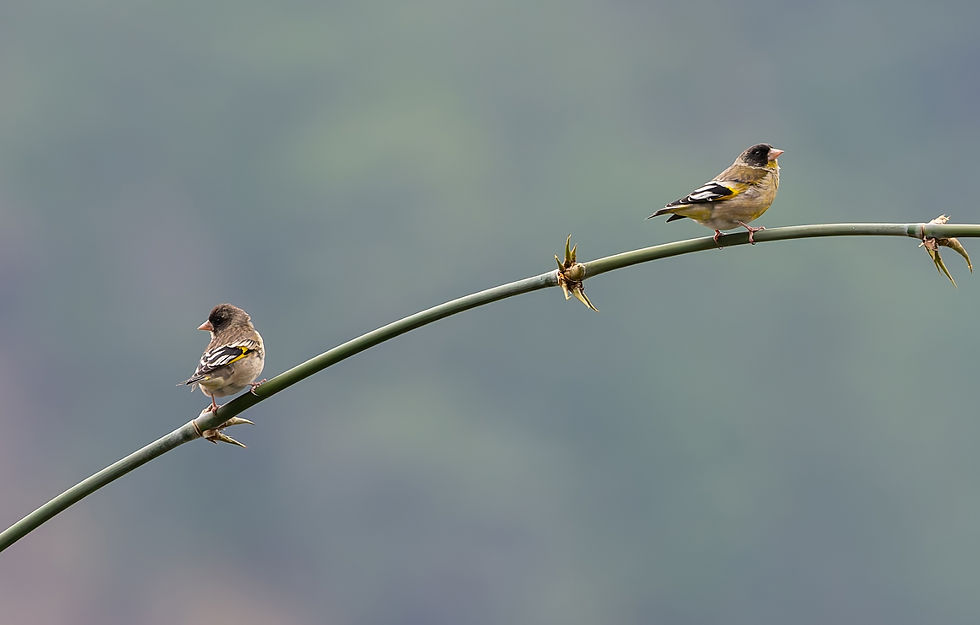
Hodgson’s redstart was quite regular along rocky streams. Russet sparrows and black-headed greenfinches were spotted on electric wires. And flocks of stripe-throated yuhina and Nepal fulvetta were active on trees, rarely staying still for long.

We came across buntings—chestnut-eared, chestnut, crested, and Godlewski’s—in open areas and scrub, and Himalayan prinia in the lower vegetation. The great barbet regularly announced its presence in the forested slopes with its deep calls. We also saw a Himalayan owl.


The Lohit River is another important birding spot. Along its rocky stretches, we saw ruddy shelduck, green-winged teal, and grey heron.
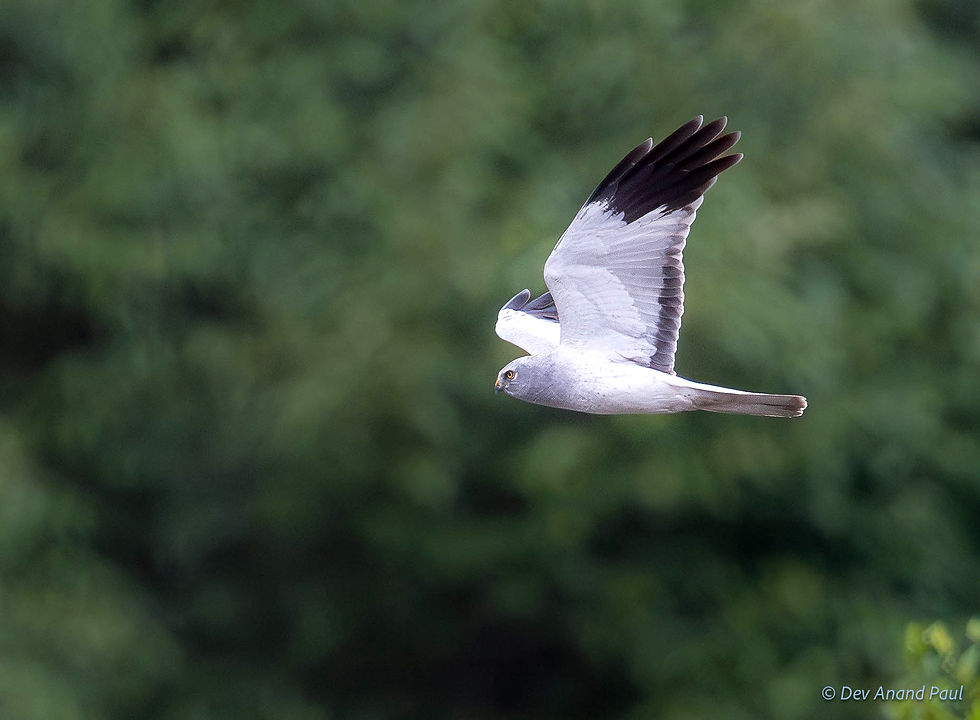
Every birder who comes to Walong spends time looking for the white-bellied heron, one of the rarest birds in the world. Critically endangered, it is known to inhabit this rocky river system, but spotting one is extremely difficult, because the river is wide, broken, and rocky, and scanning it is not easy. Searching for this bird in such a landscape is akin to looking for a needle in a haystack. Despite spending time scanning the river, we drew a blank.

Helmet Top
Helmet Top is one of the best birding spots in Walong. Situated at around 7000 feet, and featuring pine-covered slopes, hill forest, bamboo patches, and roadside vegetation, it supports a different set of birds.

The name Helmet Top has its origins in the 1962 Indo-China War. Years after the conflict, soldiers patrolling this ridge found military helmets scattered around, which gave the ridge its name. The ridge is now a military post, and we met soldiers stationed there.


Among the main bird targets here are Yunnan and chestnut-vented nuthatches. Both are pine woodland dwellers and are often seen moving quickly along trunks and branches, sometimes hanging upside down as they search for insects in the bark. Bar-tailed treecreeper and black-browed bushtit are commonly found in the canopy.


Thrushes—long-tailed, White’s, chestnut, and red-throated—moved quietly through the leaf litter, keeping to the shadows and disappearing almost as quickly as they appeared. Being ground-feeding birds, they forage among fallen leaves for insects, worms, and fruit. They are shy and are often seen only for a few seconds. We also saw a solitary mountain finch active on the ground, and heard the call of a streak-breasted scimitar-babbler.


Sichuan leaf warblers are present only here. They are easier to hear than to spot; we managed to spot one!
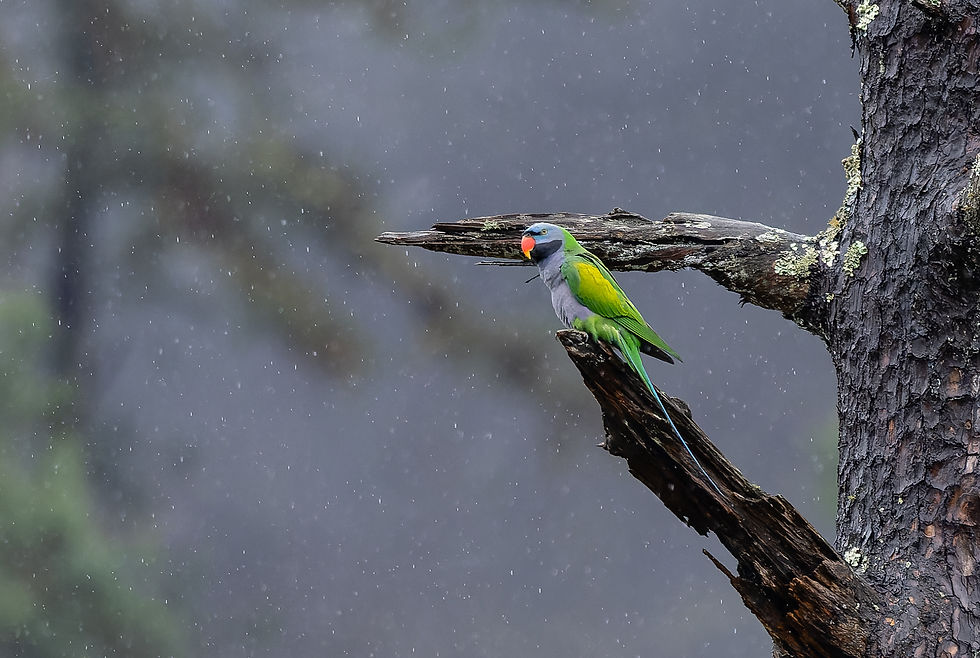
Helmet Top hosts the following species as well: Derbyan parakeets, seen around tall pines, are often detected first by their loud calls as they move through treetops. Spot-breasted parrotbill, one of the most wanted birds here, is found in the dense bamboo undergrowth. Spotted nutcracker is another inhabitant here. We missed sighting these birds, however.

Although we sighted many birds at Helmet Top, some of its best-known species remained elusive despite us spending enough time here.
Why Walong Is Distinct
As I left Walong, I carried back memories of the long mountain roads, the Lohit cutting through the valley, the army camps and bunkers, the friendly soldiers, the story of the 1962 war, the burnt hillsides, and the tribal landscape. Of course I remembered the birds too—the ones we saw and the ones we missed.
A guide like Binanda also becomes part of that memory. His ear for calls, extraordinary knowledge of habitats, and quiet confidence in the field ensured we had a wonderful birding adventure. He did not just help us find birds—he helped us experience Walong more fully.

What made the Walong trip special was the landscape, where nature, history, and human life still exist side by side.


Your blogs and the images are enough to make the less priveleged birders and travellers to get jealous!!! The narration takes me there everytime!! Awesome work Dev. Thanks for sharing. Wish I could tag along!
Brilliant story about your experience in walong. Your photos are exceptional as usual.